
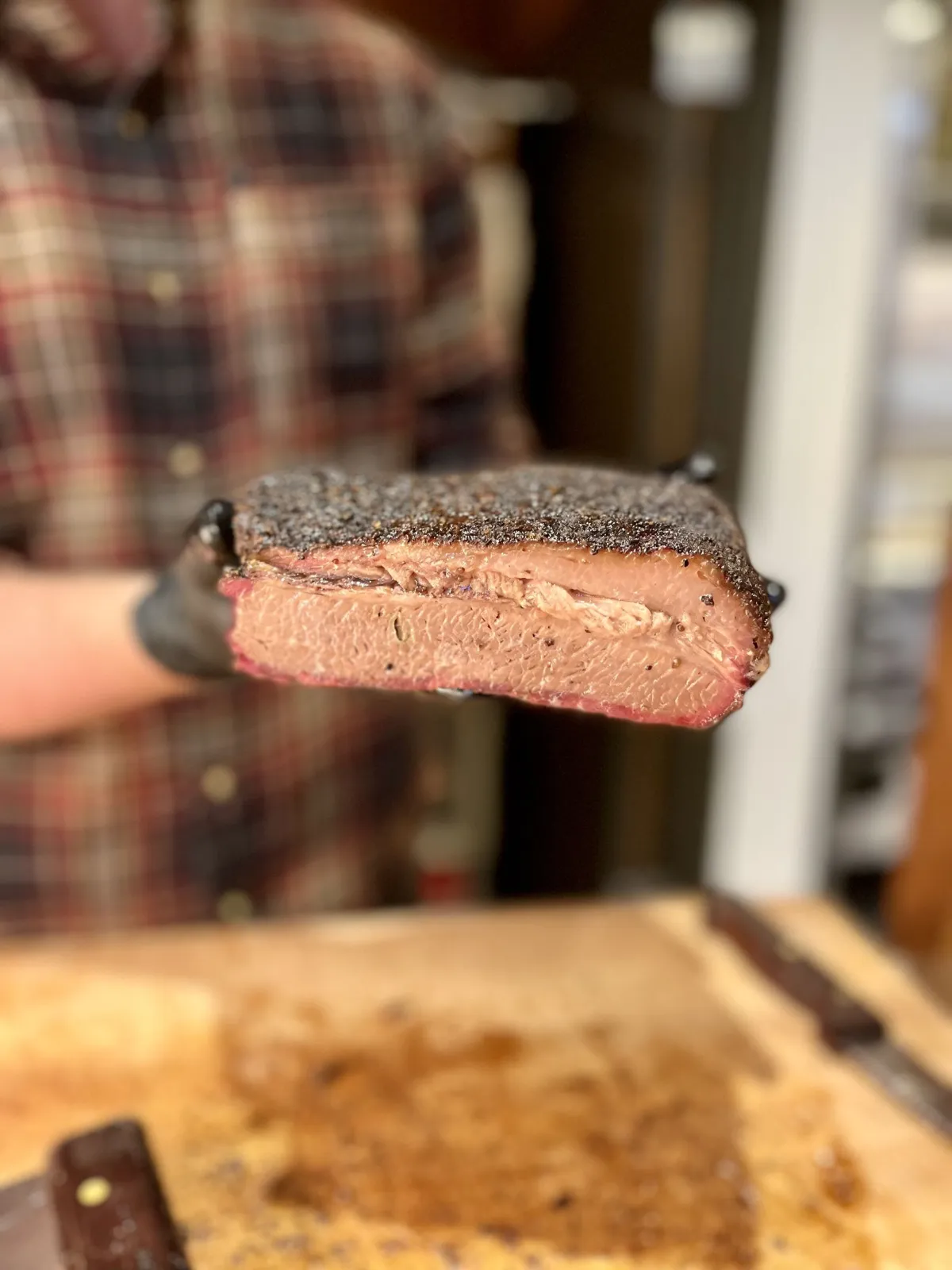
Brisket is the centerpiece of Texas barbecue, but a whole brisket is not one uniform piece of meat. It is made of two overlapping muscles, the flat and the point. Each one cooks, slices and eats a little differently, and knowing the difference helps you order or cook the brisket you like best.
Where Brisket Comes From
Brisket comes from the lower chest of the cow. These muscles do a lot of work, so the meat is full of connective tissue. That is why brisket is tough when cooked quickly and tender when cooked low and slow for many hours.
A whole, untrimmed brisket is often called a packer brisket. It includes both the flat and the point, joined by a layer of fat, with a fat cap on one side. Whole briskets commonly weigh 12 to 18 pounds before trimming.
The Flat
The flat is the larger, leaner muscle. It is long, wide and fairly even in thickness, which makes it easy to slice into neat, uniform pieces. Most grocery stores sell the flat on its own, often labeled as first cut brisket.
Because it has less fat running through it, the flat can dry out if it is overcooked or reheated too hard. When it is cooked well, it gives clean slices with a good balance of bark, smoke and beef flavor.
The Point
The point sits on top of one end of the flat. It is smaller and thicker, with much more marbling and fat. That fat melts during a long cook, which makes the point rich, juicy and very forgiving.
The grain of the point runs in a different direction from the flat, so pitmasters often separate the two before slicing. The point is sometimes cubed, seasoned again and returned to the smoker to make burnt ends.
Lean and Moist Brisket
In Texas barbecue joints, you will often hear brisket described as lean or moist. Lean slices come from the flat. Moist, or fatty, slices come from the point. Both come from the same brisket. The difference is the part of the brisket they are cut from.
Which One Is Better
Neither one is better. It comes down to preference.
- Choose the flat if you like clean slices, a beefier flavor and less fat.
- Choose the point if you like rich, tender, well marbled meat.
Many people enjoy a little of each. Cooking a whole packer brisket gives you both, along with the bark that forms across the whole piece.
Cooking and Reheating Tips
Because the flat is leaner, it benefits from careful timing and a good rest after cooking. Wrapping the brisket partway through the cook and resting it before slicing both help keep the flat moist. Always slice brisket against the grain, and remember that the grain changes direction where the flat and the point meet.
When you reheat brisket, gentle, moist heat works best for both parts. Our guide on how to reheat brisket covers the water bath, oven and microwave methods.
Brisket at Stampede
Our brisket is slow smoked in the Texas style and sold by the pound at our restaurant in Mohnton and at our food truck at Ludwig’s Corner in Glenmoore. You can also order it on a meat plate with two sides or on the Brisket Sandwich. See the brisket page or the full restaurant menu.
Burnt ends are usually cut from the point. Our guide to burnt ends vs brisket explains the difference.